
Full-leg compression
Pants are the Shorts continued to the ankle, picking up the tibial and peroneal paths on the way, so that the leg has a single continuous treatment surface from the waistband to where the Strides begin.
Full-leg weave is the largest conductive area in the family. That drives both the cost and the power budget, and it is why the sacrum module carries the same 2500 mAh cell as the Core rather than the small one used in the extremities.
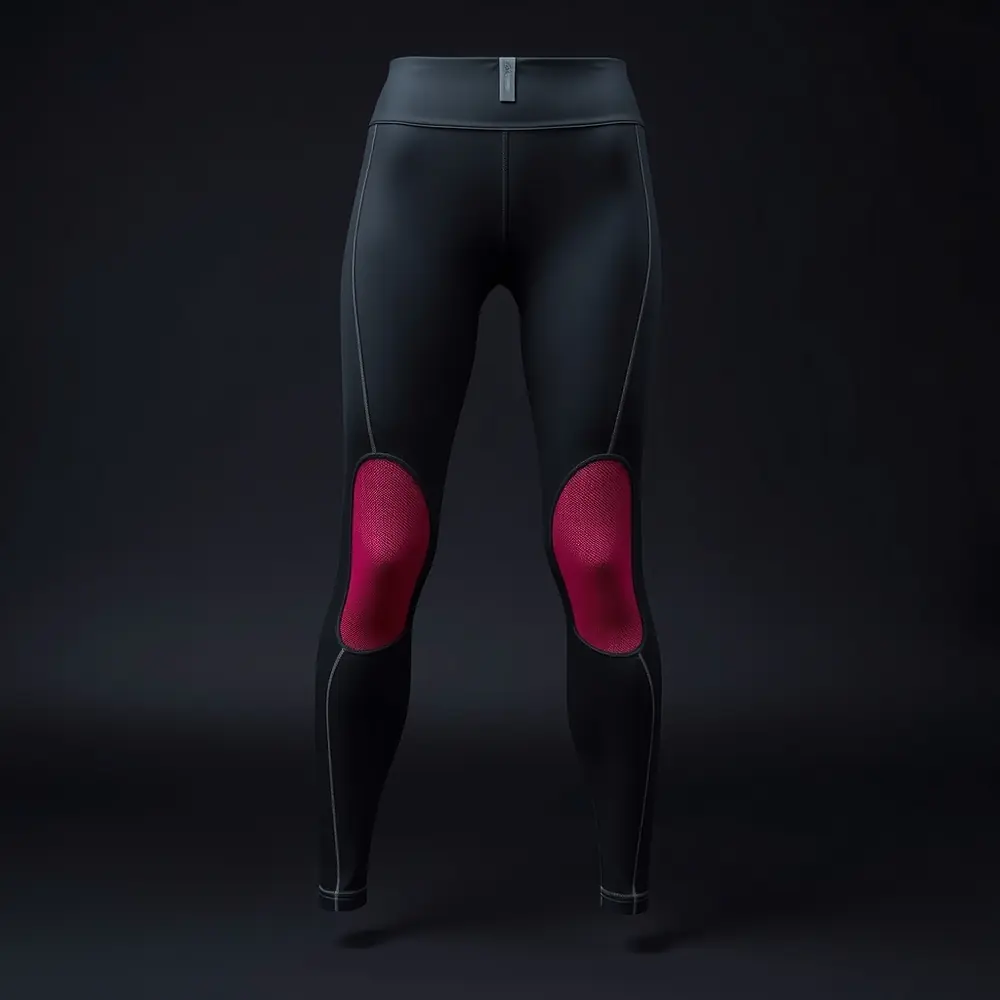
Extends the Shorts through the calves so the leg path meets the Strides at the ankle.
Architecture
What is in it
ORRA Pants carries 4 functional layers. Every named part is a real manufacturer part number, chosen once for the family and reused, so one qualification covers every unit that uses it.
Full-leg coil weave over the major neuromuscular groups
Knee and calf LED rings
Waistband and cuff bio-impedance contacts
Sacrum module
| Reaches | Worn or held | Calibration | Cost concept |
|---|---|---|---|
| Femoral, Sciatic, Tibial, Peroneal | Worn | Bio-impedance, before every session | $135 at 100-unit run |
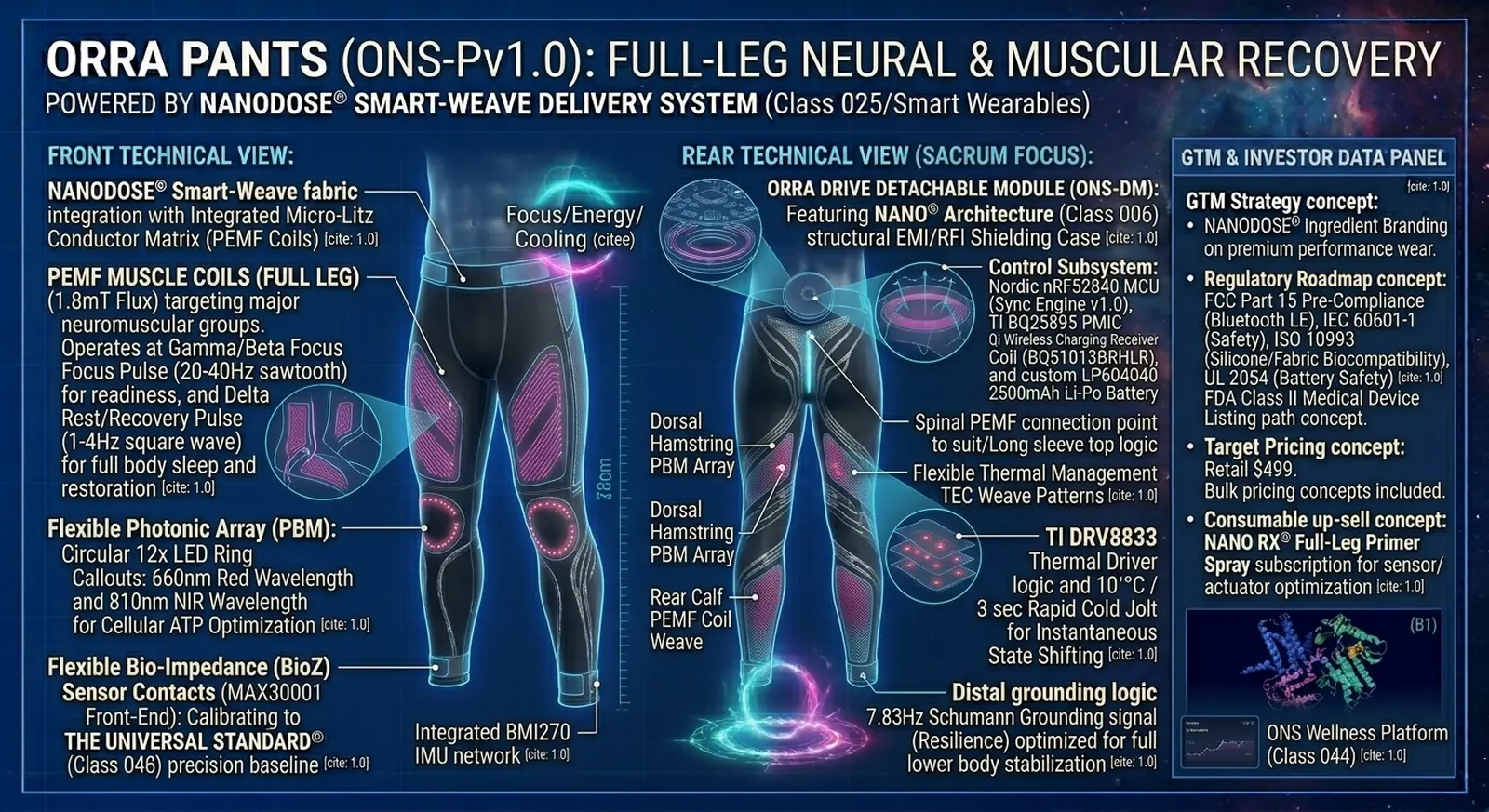
Source drawing
The sheet this page was built from
Everything above was read off one working drawing. It is published here whole, annotations included, so the specification and its source can be checked against each other rather than taken on trust.
Honest position
What we are not saying
ORRA Pants is a general wellness concept. It is not a medical device, it has not been evaluated by the FDA, and it is not intended to diagnose, treat, cure or prevent any disease. No unit has been manufactured, no certification listed on this site is held, and no human data of any kind exists.
The concept retail price of $499 is a design target set against a bill of materials. It is not an offer and there is nothing to buy.
Ready to look at the engineering?
The layer stack, the component list with manufacturer part numbers and the mode table are written down. Ask and you get the same document a contract manufacturer would.
See what it would cost
Concept retail against a real bill of materials, with the margin shown rather than implied.
Pricing →Start with the science
Three physical layers, six set points, one calibration baseline. Ninety seconds of reading.
How it works →