
Oscillatory Resonance & Radiance Array
Energy you make,
not energy you borrow.
A caffeine drink does not give you energy. It blocks the receptor that tells you you are tired, then hands back the bill at three in the afternoon. ORRA works on the other side of that trade.
Three physical layers, fired in one sequence: a pulsed magnetic field into the nerve, red and near-infrared light into the cell, and a three-second cold jolt into the skin. Each one is measurable. Together they are the product.
Mode
40 Hz · Flow
Gamma square wave, 810 nm continuous, plate held neutral.
Surface flux
1.80 mT
50-turn Litz pancake coil at 2 A. 1.60 mT still reaches 10 mm in.
Core, assembled
75 × 15 mm
A large drink coaster. It sits in the cup of the palm.
The ORRA Core
Seventy-five millimetres across. Six layers inside it.
The Core is the unit everything else in the family is derived from. It is a disc the size of a large drink coaster, held between both palms, and it is the only one with a complete component list against real manufacturer part numbers.
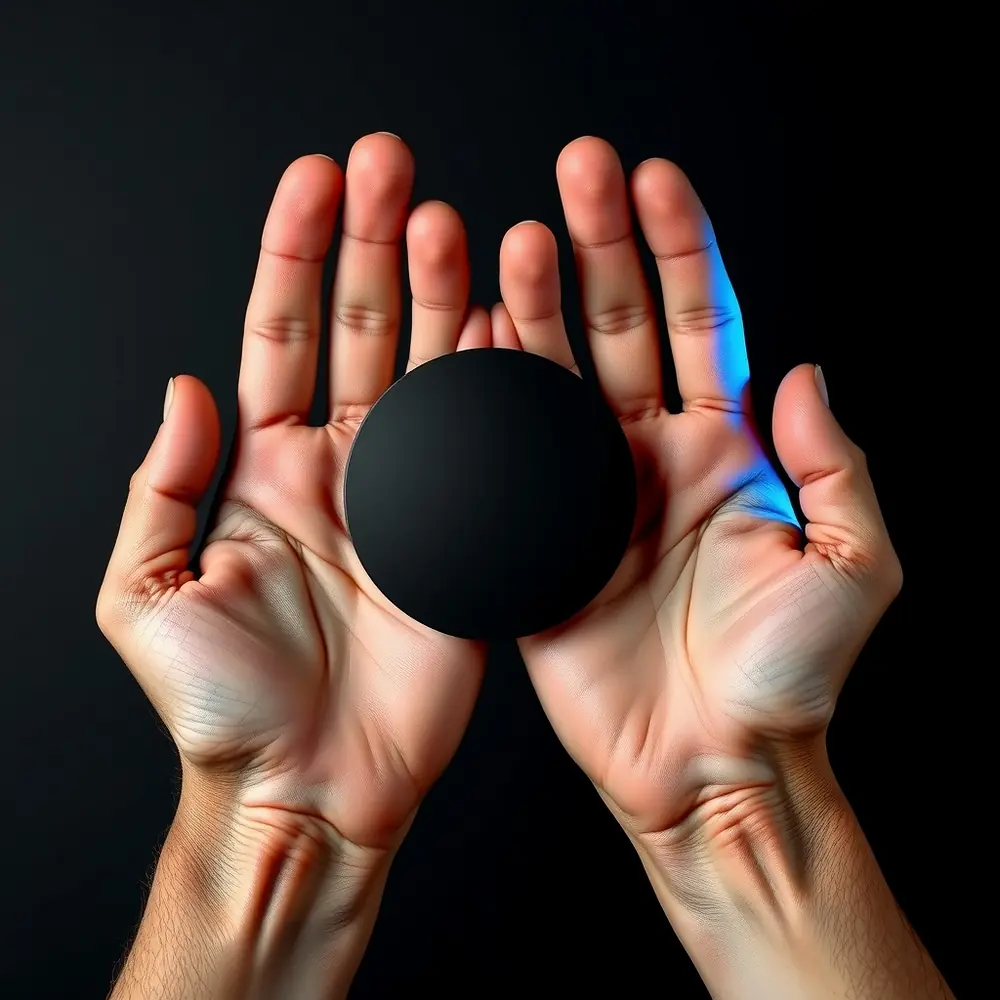
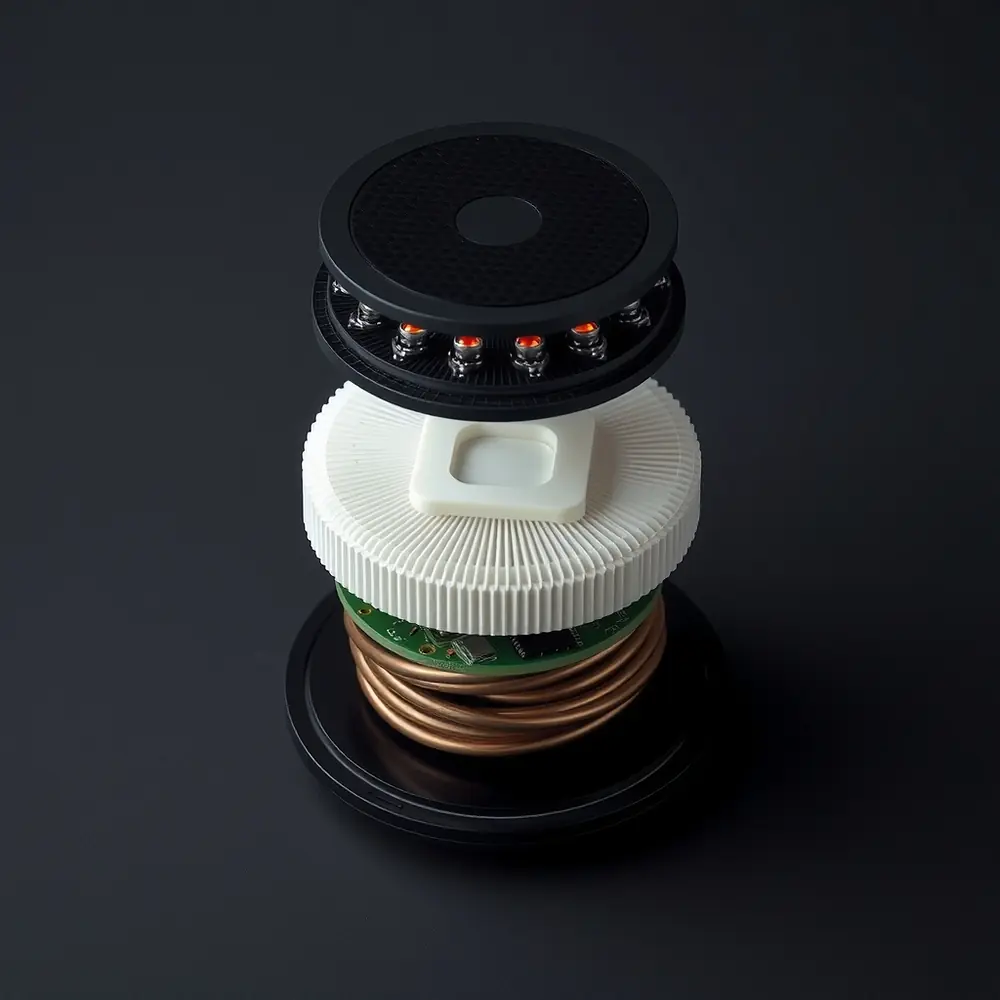
Generated product visualisation, not a photograph. No ORRA unit has been manufactured, so no photograph of one exists. These images were built from the dimensions and components on the concept sheets and are replaced with real photography when the first units are made.
The three layers
One device, three different arguments with your nervous system.
None of these is new on its own. Pulsed magnetic fields, red-light therapy and cold exposure each have their own literature and their own devices. What is not on the market is one unit that fires all three on a shared clock, against a skin measurement taken a second earlier.
Magnetic
A changing field induces a current
A flat 50-turn Litz coil pulses at the set point for the mode. A changing magnetic field induces an electromotive force in a conductor, and a nerve is a conductor. At 1.8 mT this is four orders of magnitude below a clinical TMS machine, which is the point: a tuning fork, not a sledgehammer.
Photonic
660 nm and 810 nm, into the cell
Twelve high-power emitters, half red and half near-infrared. Those two wavelengths are the ones absorbed by cytochrome c oxidase in the mitochondrial chain. Red stays shallow, near-infrared goes deeper. The Core runs them on different modes for that reason.
Thermal
Ten degrees, three seconds
A 40 mm Peltier plate drops the contact face to 10 degC for three seconds, then returns to neutral. Cold at the palm is the fastest lever in the stack and the one you feel first. A hardware cut-off sits outside the firmware and stops the plate before it can burn.
The Sync Engine
The layers are the easy part. The timing is the product.
Three set points on the Core, six across the family. Each one names a frequency, a waveform, a plate temperature and a light state, and the firmware fires them together rather than in sequence.
| Mode | Frequency | Waveform | Plate | Light |
|---|---|---|---|---|
| Jolt | 20 Hz | sawtooth | 10 degC for 3 s | off |
| Flow | 40 Hz | square | 22 degC, neutral | 810 nm continuous |
| Prime | 10 Hz | pulse | 35 degC, warm | 660 nm pulsed |
| Resilience | 7.83 Hz | sine | none | off |
| Clarity | 15-20 Hz | sawtooth | none | off |
| Deep Rest | 1-4 Hz | square | none | 660 nm dim |
These are design set points, not measured outputs. No ORRA unit has been built, so nothing here has been verified against an instrument. When a prototype exists, this table gets a measured column beside the target column, and the two will not agree at first.
The family
Nine units. They divide the body between them.
The Core is the one you hold. Everything else moves the same three layers to somewhere you cannot reach with your palms, and takes the control board with it as a module that snaps off so the garment can be washed.

Catalyst
ORRA Core
Three layers, one grip, ninety seconds.
$299concept
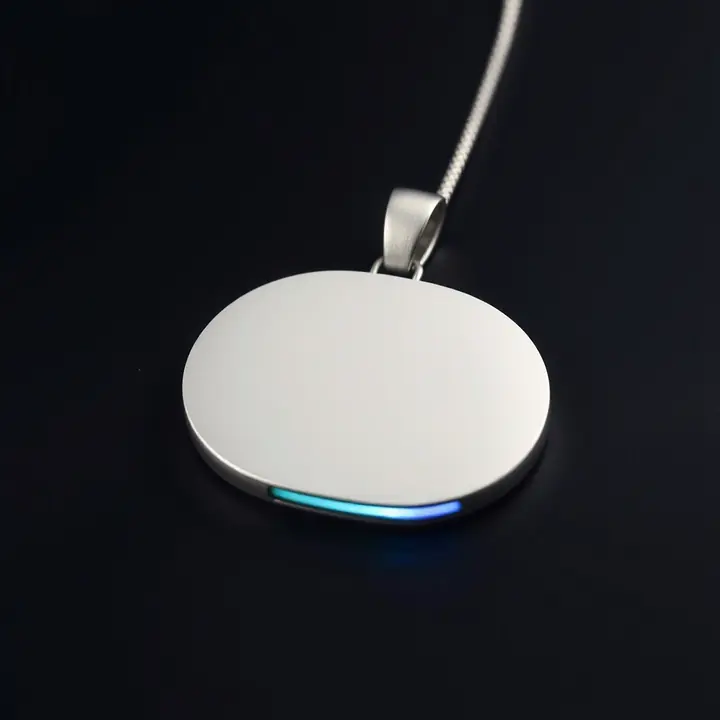
Anchor
ORRA Node
The signal you carry, so the noise stops mattering.
$199concept
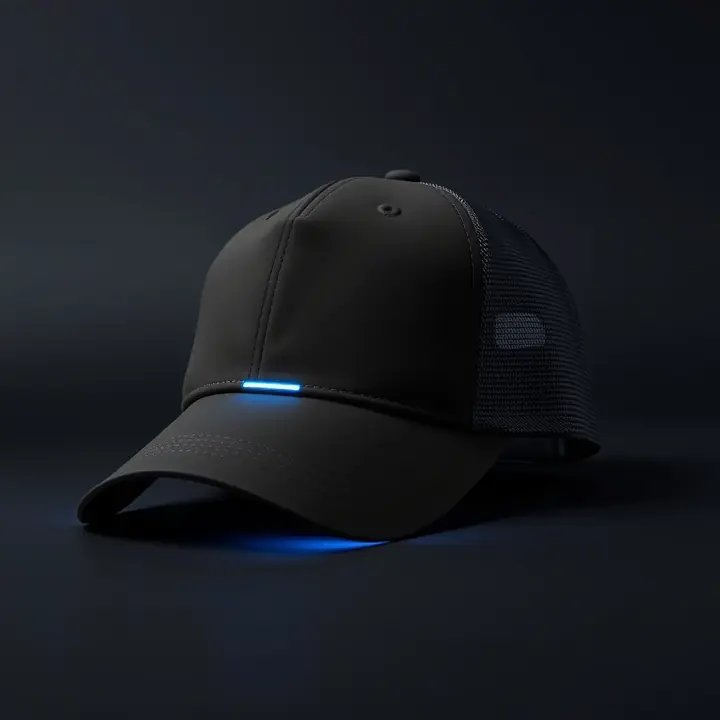
Cerebral
ORRA Dome
Wear the mode instead of holding it.
$399concept
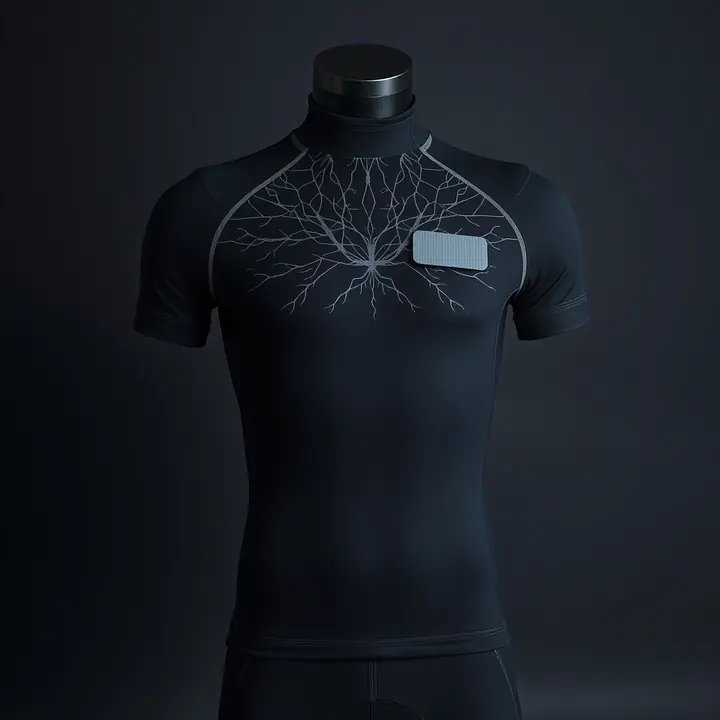
Torso
ORRA Neural Suit
The spine, the vagus, and a cold jolt between the shoulder blades.
$499concept
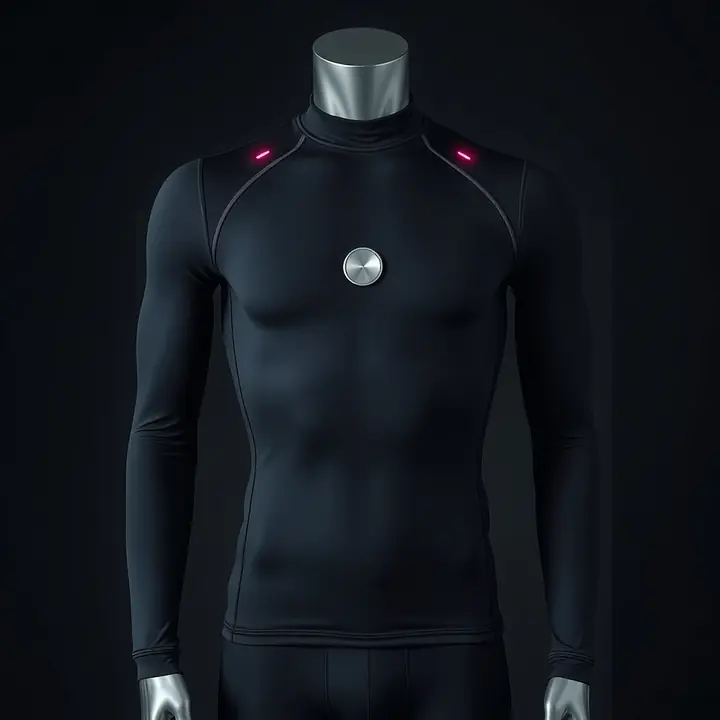
Torso
ORRA Neural LS
Everything the Suit does, carried down both arms.
$599concept
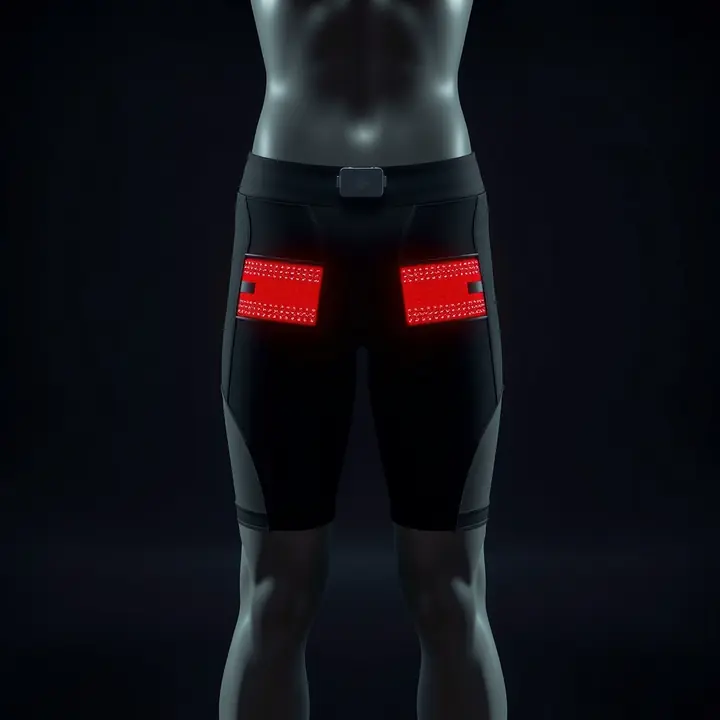
Lower body
ORRA Shorts
Quads and hamstrings, before the session and after it.
$349concept
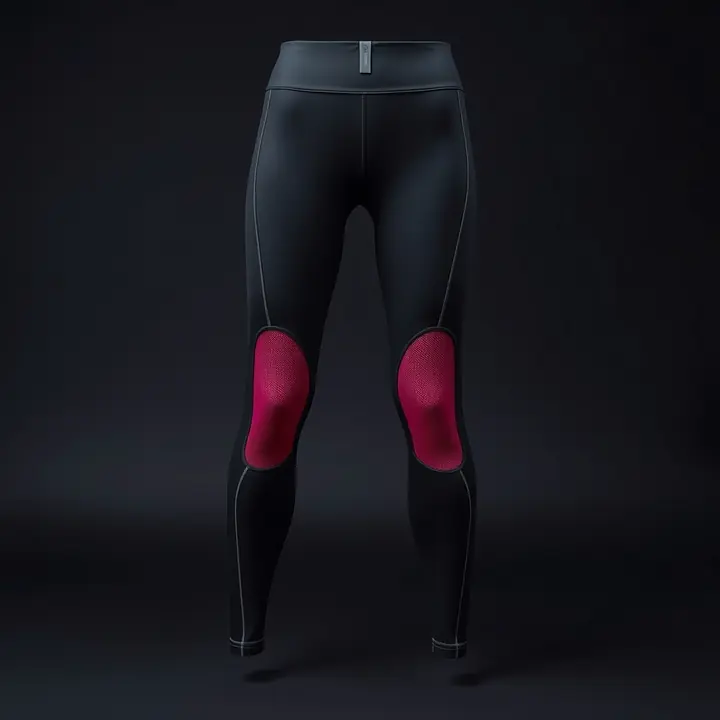
Lower body
ORRA Pants
Hip to ankle, one continuous path.
$499concept
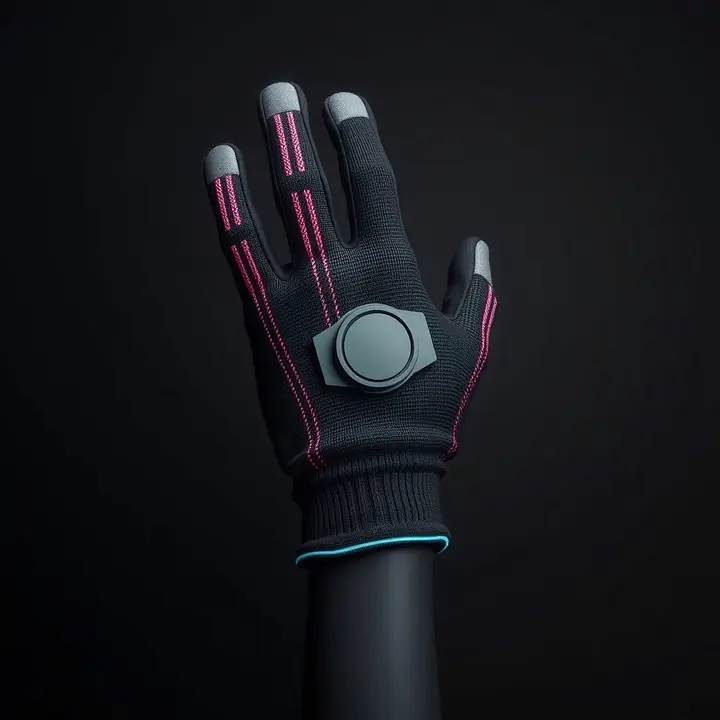
Hands
ORRA Gloves
The hands that do all the typing get their own mode.
$249concept
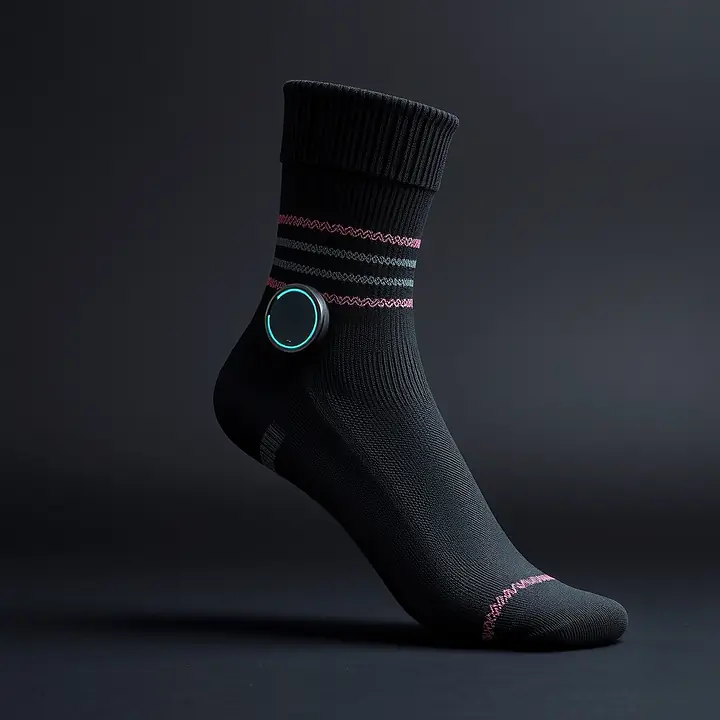
Feet
ORRA Strides
The furthest point from the brain, and the easiest one to reach.
$199concept
Where this actually stands
Nothing here has been built.
It would be easy to write this site as though the Core were shipping. It is not, and a hardware page that pretends otherwise is worth nothing to the person who has to build it.
0
prototypes built
The first five units are the next milestone.
0
certifications held
Eight standards are on the roadmap. None have been tested.
0
patents filed
The claims are drafted. Nothing is on file at the USPTO.
5
registered marks
NANO, NANO RX, THE UNIVERSAL STANDARD, NANODOSE, NANOBIDIOL.
What exists
A layer stack with manufacturer part numbers for every active component. A functional block diagram. A mode table with frequencies, waveforms and timing. A bill of materials costed at 100 units. A test plan. Sixteen engineering visualisations. A registered trademark portfolio across eight classes.
What does not
A board. A case. Firmware. A single measurement taken from a real coil against a real palm. Any regulatory file. Any patent application. Any clinical or human data of any kind. Until those exist, every number on this site is a target, and it is labelled as one.
The moat
The hardware is copyable. The vocabulary is not.
Five registered marks across eight classes already cover the materials, the apparel, the calibration baseline, the platform and the consumables. ORRA is the product name; these are what the parts are called.
| Mark | Classes | What it covers in this family |
|---|---|---|
| NANO® | 005, 006, 018, 044, 046, 051, 052 | Master brand. Chassis architecture and EMI shielding on the Core and every ORRA Drive; cases and carriers. |
| NANO RX® | 005, 006, 018, 044, 046, 051, 052 | The wellness platform at nanorx.com, and the conductive interface media. |
| THE UNIVERSAL STANDARD® | 005, 006, 018, 044, 046, 051, 052 | The calibration baseline — what the bio-impedance reading is measured against, and the safety cut-off thresholds. |
| NANODOSE® | 025, US 022, US 039 | The smart-weave delivery system in every worn SKU. |
| NANOBIDIOL® | 025, US 022, US 039 | Bio-active formulations and expanded contact media. |
Ready to look at the engineering?
The layer stack, the component list with manufacturer part numbers and the mode table are written down. Ask and you get the same document a contract manufacturer would.
See what it would cost
Concept retail against a real bill of materials, with the margin shown rather than implied.
Pricing →Start with the science
Three physical layers, six set points, one calibration baseline. Ninety seconds of reading.
How it works →